Location: Isokummun Kehräämö, Eskola near Kannus Finland
Friday 28 April
We started with a presentation about the location and the area in which the study tour was held. Then Roger gave a talk about EWA. Both presentations gave us a good picture of the current situation.
Every Friday, Satu receives a small number of children on the farm as part of a social project. The children need extra attention and are actively involved on the farm with supervisors. Sometimes they help feeding the goats or walk the dogs. It’s important, especially for these children, to see that taking responsibility for other beings is heart warming and that their actions matter to the animals. When we met the five children with their supervisors, they answered our questions in very good English which was also good for their self-esteem. They had prepared a wonderful exposition of their activities and a video that they had made on the farm. It was the Christmas Story of Maria and Jesus looking for accommodation. This part of the program really touched us.
In the afternoon, Maria Ehnström-Fuentes gave a digital presentation about the wool’s place in history. She also mentioned the Fibreshed Initiative founded by Rebecca Burgess. One of her important remarks during her interesting talk: «In the discussion about wool, the importance of sheep in the landscape is often forgotten and the great role sheep have played in history in terms of clothing.”
Saturday April 29
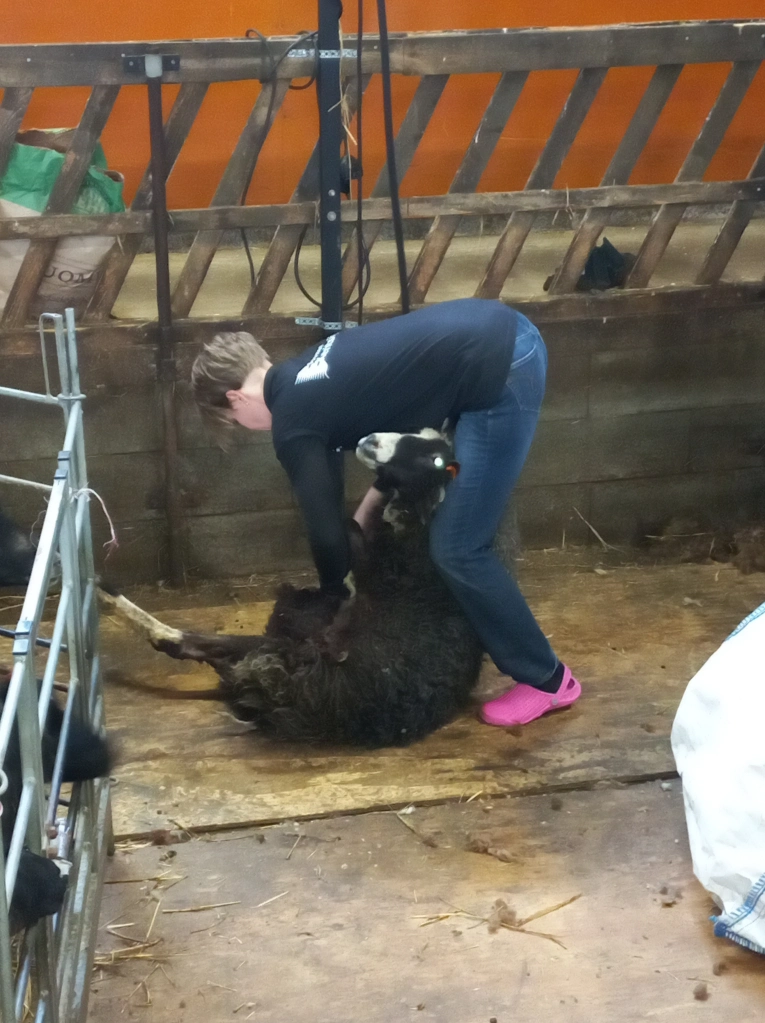
Two shearers from the Finnish Shearers Association joined our group. Together with Satu they sheared some sheep at Isokummun Luomu Oy, Satu’s farm. The importance of a good organization and professional education of shearers and contacts with British Wool was discussed. In June, these two shearers were to take part in the competition held at the Royal Highland Show this year with Satu as the team manager.
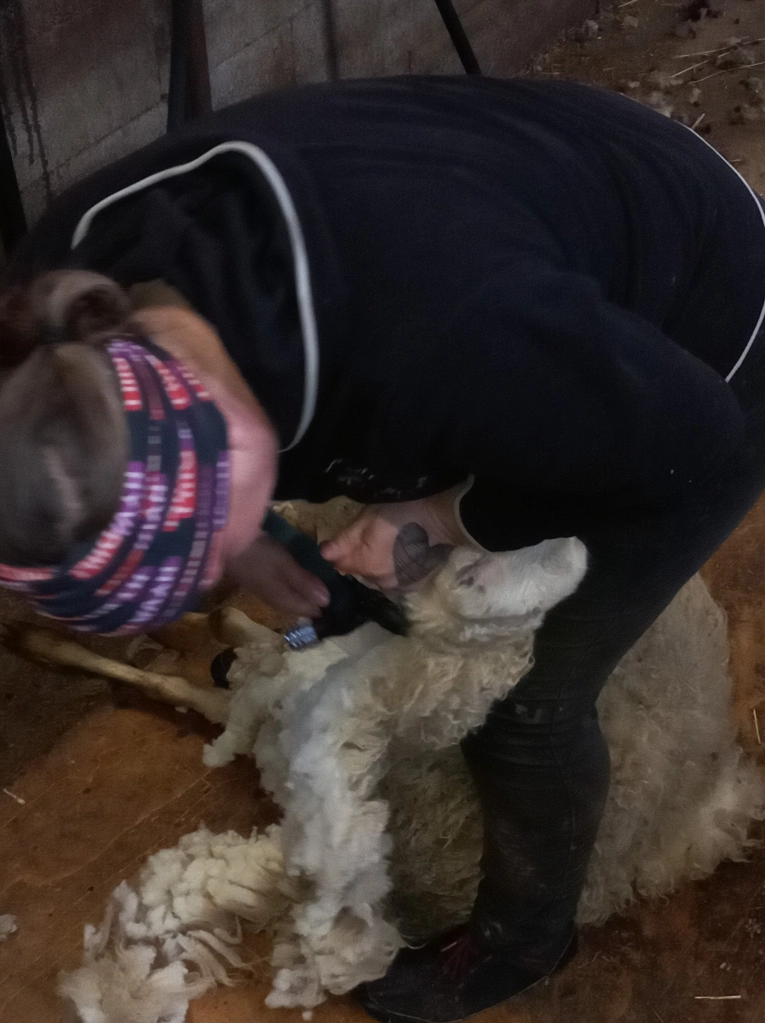
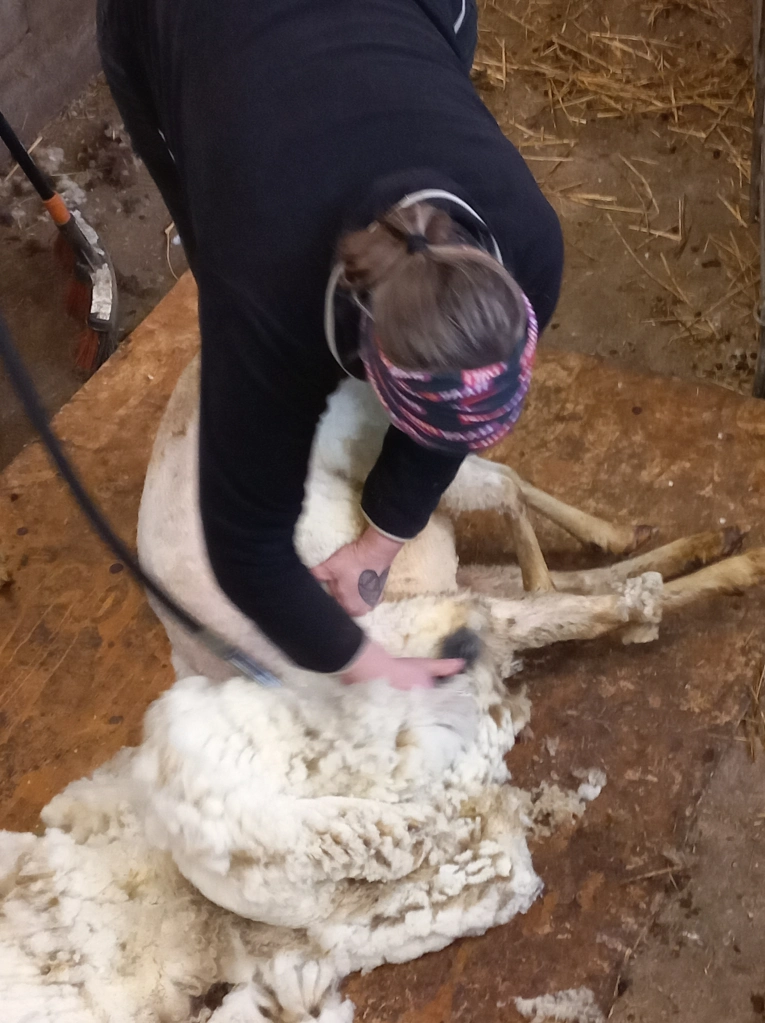
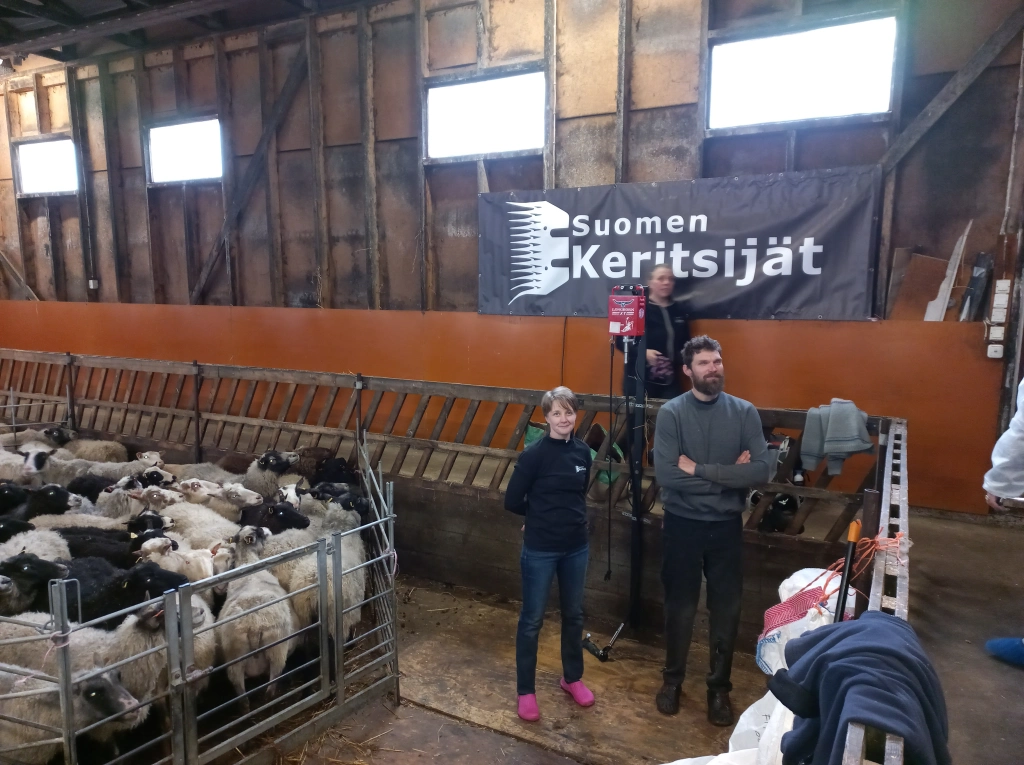
In the afternoon, we visited the spinning mill Isokummun Kehräämö. Master-spinner Sami, Satu’s brother, showed us around the mill and explained every step of the spinning process.
Following this, we visited the nature area close to the sea where about a hundred sheep maintain the landscape in the summer months.
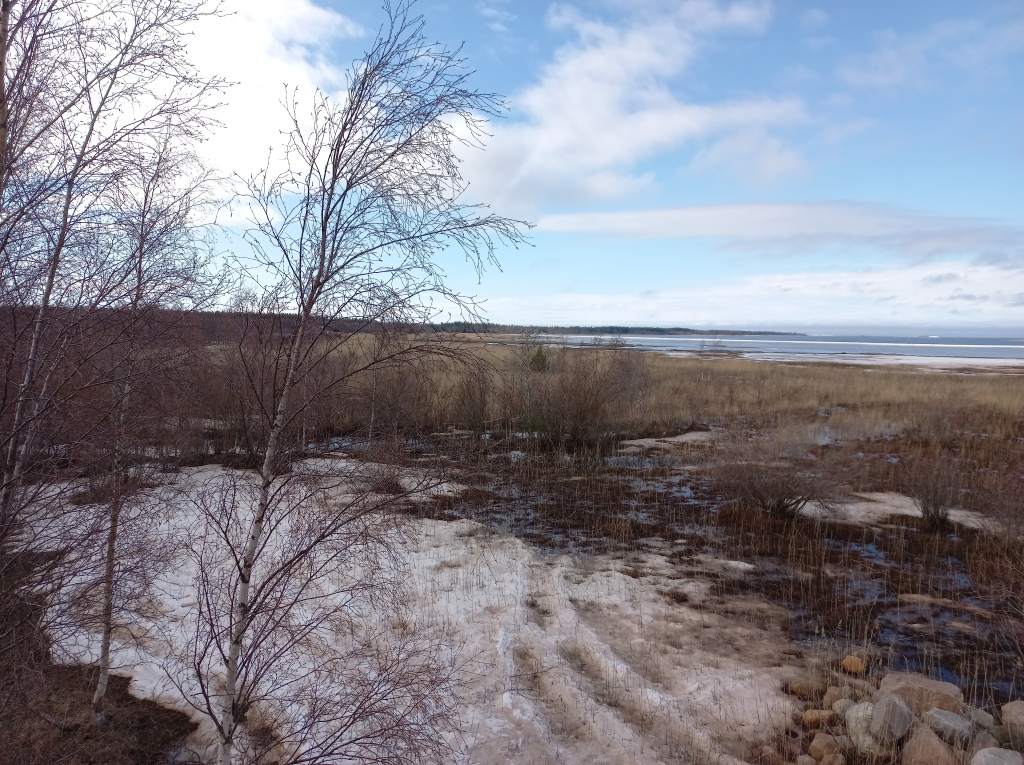
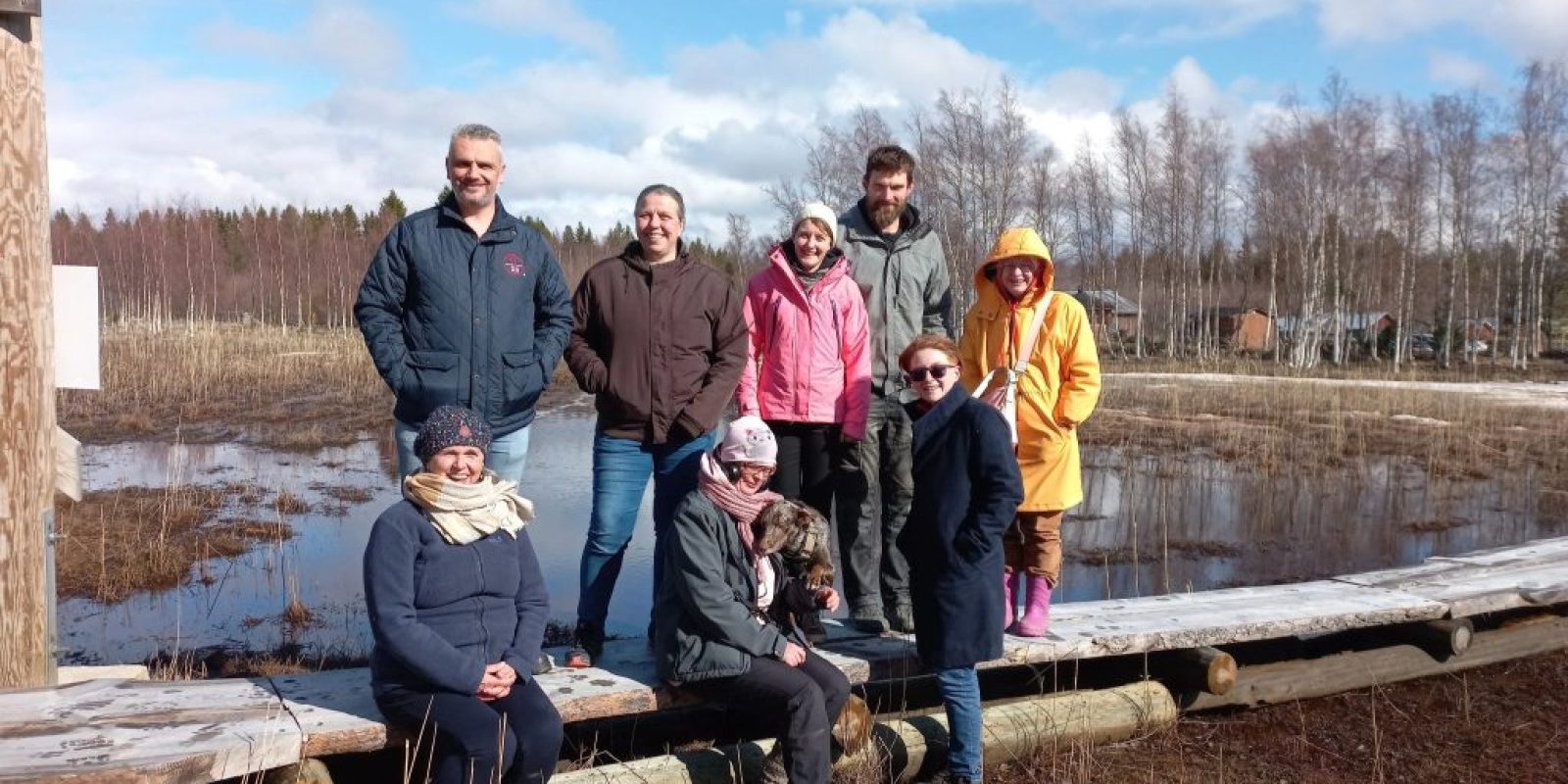
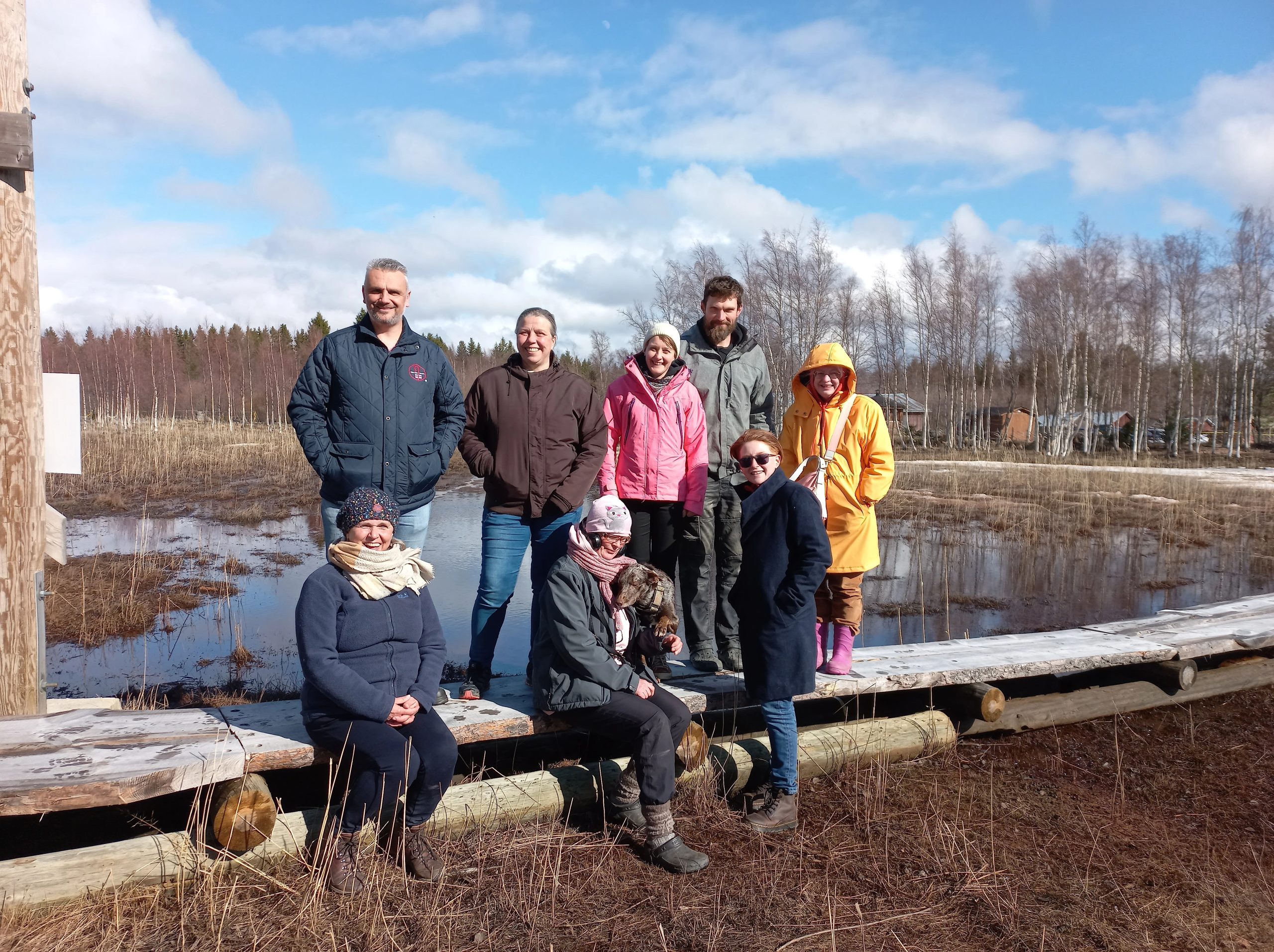
The sheep are kept in a large area surrounded by predator fences (especially for wolves) and provide an open landscape. We were able to walk up to the wooden watch tower due to the board walks across the swampy area where we had a splendid view over the landscape that was still spotted with some snow.
Sunday April 30
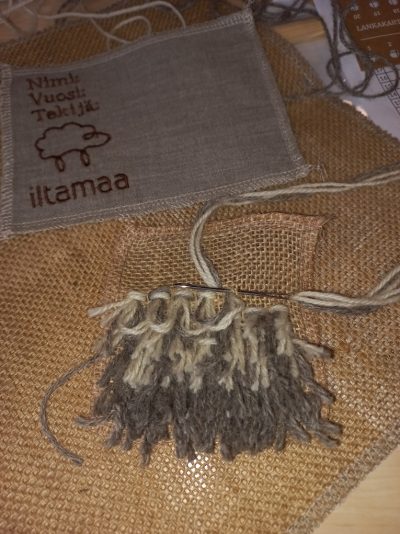
Since we were not too many participants in this study tour, the workshops were made available to all participants who wanted to. So, some participants joined Karin for felting Finish wool in the morning, while others took a beautiful walk through a nearby swamp. In the afternoon, a digital Ryuji workshop was offered by Jenni. She introduced us to the historical Ryiji rugs that are exhibited in the museums with their traditional motifs and designs to the modern ones. After this introduction, we learned this special knotting technique to make a Rya rug.
In the evening there was a wonderful gala-dinner with live music and singing at the community center of Eskola.
Monday May 1
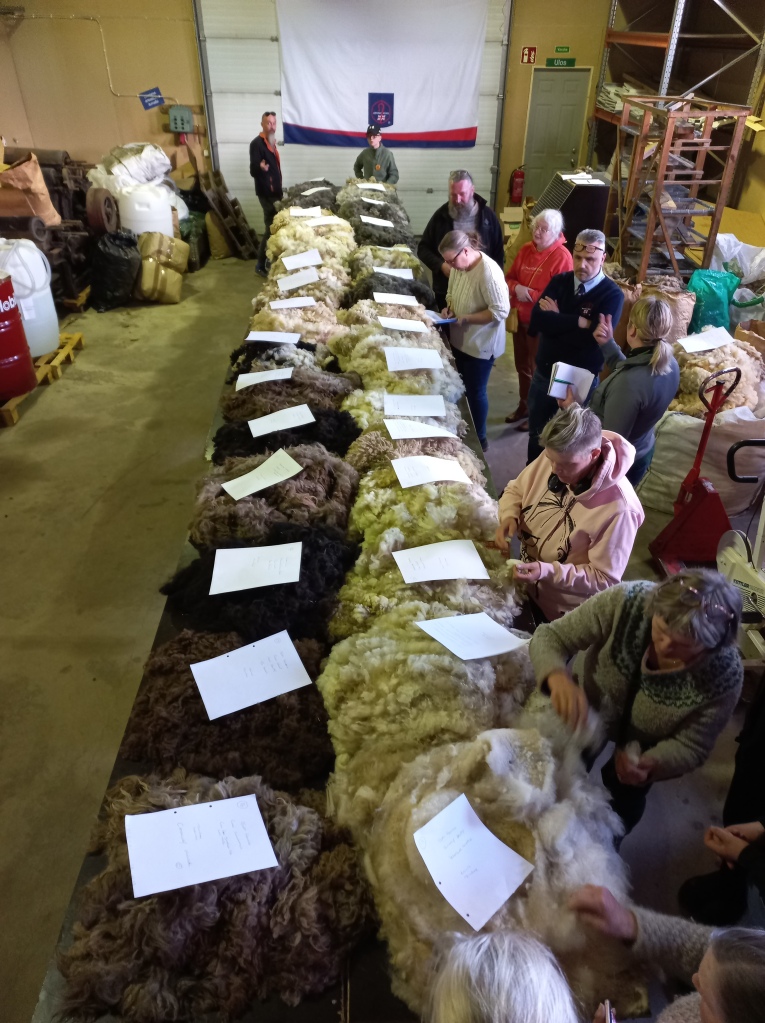
Ian and Roger with the help of Amy were the judges of the Fleece competition. The Finnish shearer had collected some fleeces from various Finnish farms. There were also several fleeces from Isokumpu Sheepfarm. Each fleece got a number and the judges had to evaluate the fleeces without knowing where it was from. They also tried to give constructive feedback, so every owner of the fleece will have the chance to improve the quality in the future if they want to. After the judging, the comments were on each fleece and the other participants could view the result. Everyone agreed: this is a very good way to bring wool to the attention of several parties. The overall winner was an excellent fleece from a Finnish sheepfarm.
Tuesday May 2
We visited a factory Lappajärven värjäämö that dyes all kinds of natural materials – especially spun paper and linen. Mostly chemical dyes are used and there is a new development with natural dye. We also visited the international company Lapuan Kankurit, which mainly processes linen into textiles for the home: towels, blankets, etc. They process wool on small scale. The CEO was very open and informative and also showed us the carding machine/spinning mill/wool storage.

Thanks for reading this blog! I hope you enjoyed it. Sorry for not translating it into Spanish or another language; please use an internet translator if you need to. Thanks!


